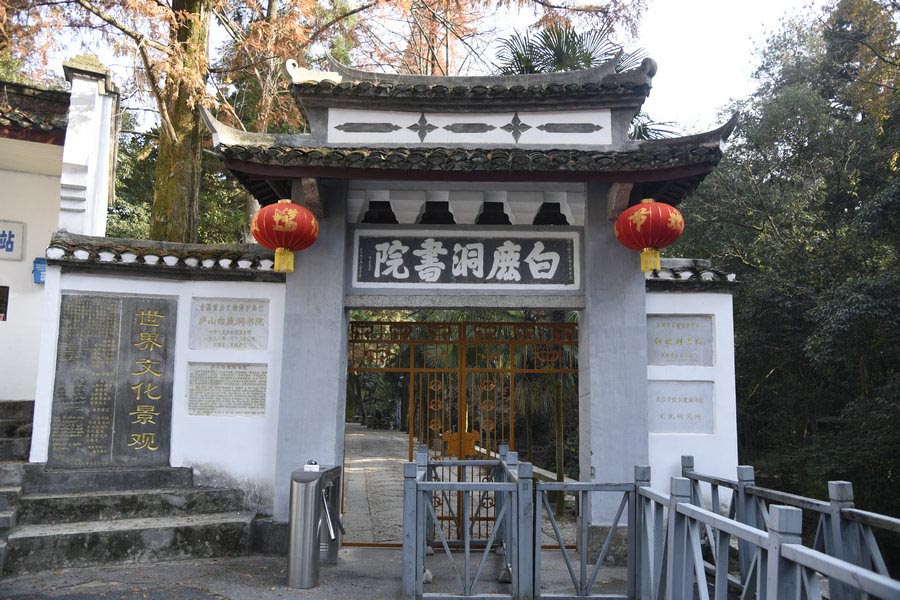
Bailudong Academy
Introduction
Bailudong Academy, also known as White Deer Cave Academy, is one of the most prestigious educational institutions in the history of ancient China. Situated in the scenic area of Lushan Mountain in Jiangxi province, it stands as a significant symbol of Chinese educational and cultural heritage. The academy is one of the four great academies of ancient China, recognized for its contributions to the development of Confucianism and Chinese education. Nestled at the southern foot of Houping Mountain, approximately 10 kilometers south of Wulao Peak, the academy is surrounded by the natural beauty of Lushan, making it not only a center of learning but also a place of tranquility and inspiration.
History
Founding
The origins of Bailudong Academy can be traced back to the Tang Dynasty (618-907), a period marked by cultural prosperity and intellectual advancement in China. The poet Li Bo and his brother began the tradition of scholarly seclusion at the site, which eventually attracted more intellectuals and scholars. Li Bo's association with the area laid the groundwork for future developments. Upon his appointment as governor of Jiangzhou prefecture, Li revisited the site and oversaw the construction of initial buildings and pavilions, transforming it into a tourist attraction known as Bailudong, or White Deer Cave.
Historical Development
During the Song Dynasty (960-1279), Bailudong Academy underwent significant expansion and formal establishment. As one of the earliest comprehensive academies in Chinese history, it became a prominent center for teaching and learning. The academy gained considerable fame under the influence of renowned scholars such as Zhu Xi, who played a pivotal role in shaping its curriculum and academic reputation. Zhu Xi's teachings and the academy's scholarly activities attracted students and intellectuals from across the region, positioning Bailudong as a leader among the Four Academies of China.
Decline and Revival
Like many historical institutions, Bailudong Academy experienced periods of decline due to various socio-political changes and the passage of time. Despite these challenges, efforts to revive and preserve the academy's legacy have been ongoing. In recent years, Bailudong has regained its status as an important center for the study and promotion of Chinese traditional culture. Through cultural studies, academic exchanges and teaching activities, the academy has successfully attracted modern scholars and students, fostering a renewed appreciation for its historical and cultural significance.
Architecture
Layout
The layout of Bailudong Academy reflects the architectural aesthetics and scholarly ideals of ancient China. The academy is encircled by carved stone walls, creating a serene and contemplative environment for study and reflection. The main structures are arranged in a manner that emphasizes harmony with the natural surroundings, integrating traditional Chinese architectural elements with the landscape of Lushan Mountain.
Notable Structures
Bailudong Academy is home to several notable structures that exemplify its historical and cultural richness. Key buildings include the Lingxing Gate, which serves as the main entrance, Banchi, Lisheng Gate, Lisheng Hall, Zhuzi Temple, Bailudong and the Imperial Writing Pavilion. The Zhuzi Temple, built to honor the revered scholar Zhu Xi, stands as a testament to his influence on the academy. Additionally, the presence of a cave with a stone white deer inside serves as a symbolic representation of the academy's name, Bailudong, or White Deer Cave.
Educational Influence
Curriculum
The curriculum at Bailudong Academy was deeply rooted in Confucian philosophy and classical Chinese texts. Under the guidance of scholars like Zhu Xi, the academy emphasized the study of Confucian classics, moral philosophy and the development of scholarly virtues. The curriculum was designed to cultivate not only intellectual acumen but also moral character and social responsibility, aligning with the Confucian ideal of the cultivated gentleman.
Notable Scholars
Bailudong Academy attracted many distinguished scholars throughout its history, most notably Zhu Xi, who is considered one of the foremost Confucian philosophers. Zhu Xi's teachings and his interpretation of Confucianism left a lasting impact on the academy and Chinese philosophical thought. His contributions to the curriculum and educational practices at Bailudong helped shape the academy's legacy as a center of intellectual excellence.
Cultural Significance
Bailudong Academy holds a significant place in Chinese cultural history. It is not only an educational institution but also a symbol of the enduring legacy of Confucianism and traditional Chinese culture. Over the centuries, the academy has been a beacon of scholarly pursuit and cultural preservation, contributing to the dissemination and perpetuation of Chinese philosophical thought. Its historical inscriptions, architectural beauty, and association with renowned scholars make it a cultural treasure and a source of inspiration for future generations.
Preservation Efforts
In the modern era, efforts to preserve and promote the legacy of Bailudong Academy have intensified. The academy has become a focal point for cultural studies and academic exchanges, attracting scholars and enthusiasts from around the world. Initiatives such as the White Deer Forum have facilitated dialogue and exploration of traditional culture, underscoring the academy's role as a vibrant center for cultural heritage and education.
Today, Bailudong Academy continues to serve as a hub for cultural and educational activities. It hosts events, workshops and lectures aimed at promoting traditional Chinese culture and fostering a deeper understanding of its historical significance. The academy's integration of ancient traditions with contemporary issues has made it an appealing destination for visitors eager to explore China's rich cultural heritage.








